Why This Topic Matters More Than Most Buyers Realize
I've sat across the table from buyers who were shocked — genuinely shocked — at closing when they saw the full carrying cost of their new home. Not the mortgage. Not the taxes. The HOA fee plus the metro district fee plus the sub-association fee they didn't know existed.
This is one of the most important conversations I have with every buyer in Castle Rock, and it's almost never had enough in the listings they find online. Let me fix that right now.
HOAs: The Rules You Live By
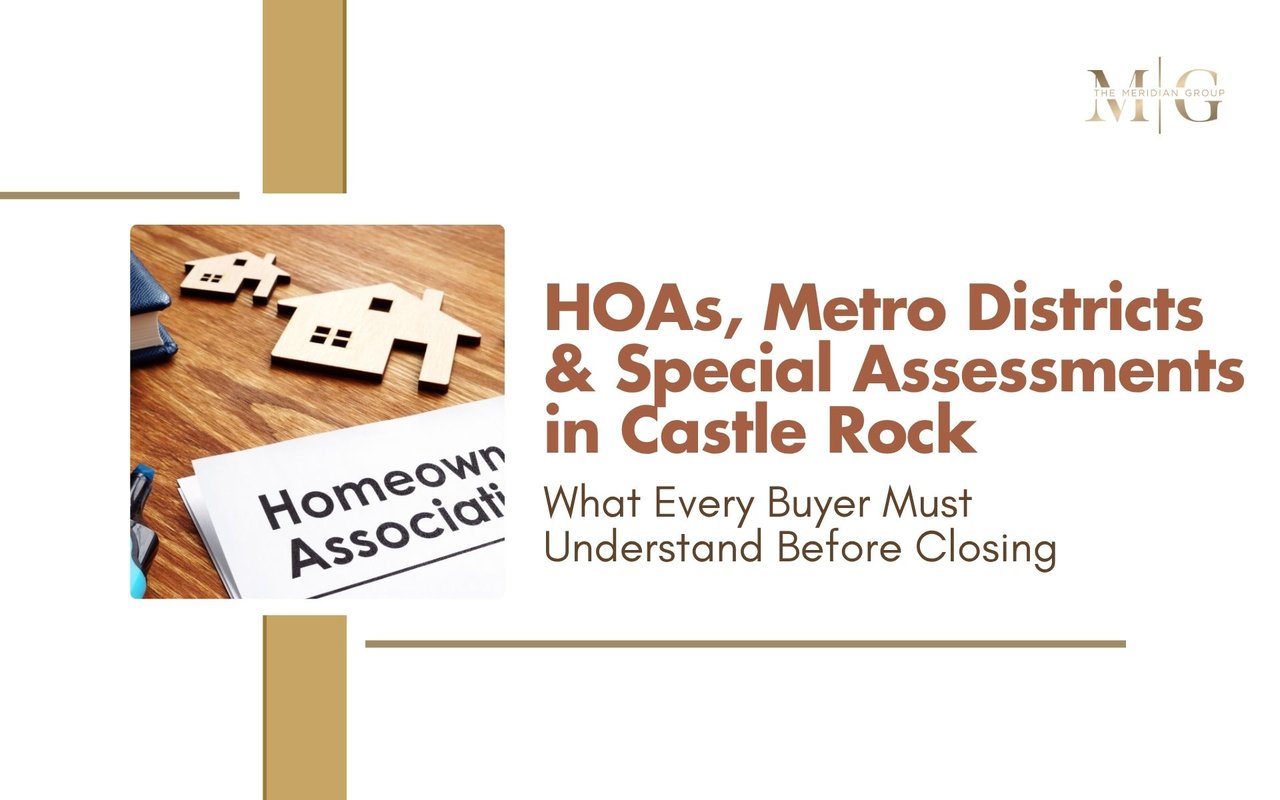
A Homeowners Association (HOA) is a private organization that governs a residential community. When you buy a home in most Castle Rock master-planned communities — The Meadows, Crystal Valley Ranch, Terrain, Cobblestone Ranch, and many others — you automatically become a member. That membership comes with monthly or annual dues, and with a set of Covenants, Conditions & Restrictions (CC&Rs) that govern everything from what color you can paint your front door to whether you can park an RV in your driveway.
HOA fees in Castle Rock range widely. In some neighborhoods, you'll pay $30–$50 per month for basic maintenance of common areas. In others — particularly communities with pools, fitness centers, trails, and maintained landscaping — you'll pay $150–$400 per month or more. Castle Pines Village, being a gated luxury community, has higher fees that reflect its extensive amenities and maintenance standards.
Before you fall in love with a home, I always pull the HOA documents: the CC&Rs, bylaws, financial statements, meeting minutes, and any pending special assessments. These documents tell you the financial health of the HOA and reveal any looming costs that could affect your decision.
Metro Districts: The Other Bill Most Buyers Don't See Coming
A metro district (formally called a Metropolitan District) is a quasi-governmental entity that finances and maintains public infrastructure in a new development — things like roads, parks, trails, and utilities. The key distinction from an HOA: metro district fees are collected through your property tax bill, not a separate HOA payment.
This is where buyers get tripped up. They compare two Castle Rock homes and focus on the list price. But one home is in a metro district and one isn't — and that difference can add $1,500–$3,000 per year (or more) to the effective cost of ownership.
Many newer Castle Rock communities — Crystal Valley Ranch and parts of Terrain, for example — were built with metro district financing. The developer used the metro district to fund infrastructure, and buyers repay that over time through their tax bills. It's not unusual for a Castle Rock home in a metro district to carry an additional mill levy of 40–60 mills on top of the standard Douglas County tax rate.
Special Assessments: The Wildcard
Even the most well-run HOA can face an unexpected major expense — a pool replastering, a road resurfacing, a clubhouse roof replacement. If the HOA's reserves aren't adequately funded, they may levy a special assessment: a one-time charge to every homeowner in the community.
Before you go under contract, I strongly recommend requesting the HOA's reserve study and reviewing their current reserve fund balance. A well-funded HOA keeps reserves at 70–100% of recommended levels. An underfunded HOA is a future assessment waiting to happen.
How I Help My Buyers Navigate All of This
Every offer I help a client write includes a thorough review of all HOA and metro district disclosures. I walk clients through the fee structure before we even tour the home — so there are no surprises. And if a community's financials concern me, I tell you directly. That's what a trusted advisor does.
📞 Questions about a specific Castle Rock neighborhood's fees? Call or text: (720) 331-2355 | 🌐 meridiangrouprealestate.com
Frequently Asked Questions
Q: What is the difference between an HOA and a metro district in Castle Rock?
A: An HOA is a private organization that enforces community rules and manages shared amenities, funded by dues you pay directly. A metro district is a tax-based district that finances public infrastructure; those costs appear as a mill levy on your annual property tax bill. Many Castle Rock communities have both.
Q: How do I find out if a Castle Rock home has a metro district?
A: The seller's disclosure and the title commitment will both identify metro district obligations. I also check this proactively for every buyer client using Douglas County public records before we make an offer — it's that important.
Q: Are HOA fees included in my mortgage payment?
A: No — HOA fees are paid separately, directly to the HOA. Metro district taxes, however, are included in your property tax bill, which may be impounded into your monthly mortgage payment through an escrow account. Make sure your lender accounts for the full mill levy when calculating your payment.
Q: Can I negotiate HOA fees when buying a home?
A: HOA fees are set by the association and are not negotiable between buyer and seller. However, some sellers offer a credit toward HOA dues as part of the purchase negotiation. I can help you structure this if the fees are a concern.
Q: What should I look for in HOA financial statements before buying?
A: Focus on the reserve fund balance relative to the reserve study recommendation, any pending litigation involving the HOA, special assessments levied in the last 3–5 years, and the HOA's delinquency rate. I review all of these with every buyer client before we go under contract.
— Tammy Petit Loveland, Broker/Owner | The Meridian Group Real Estate | (720) 331-2355 | meridiangrouprealestate.com