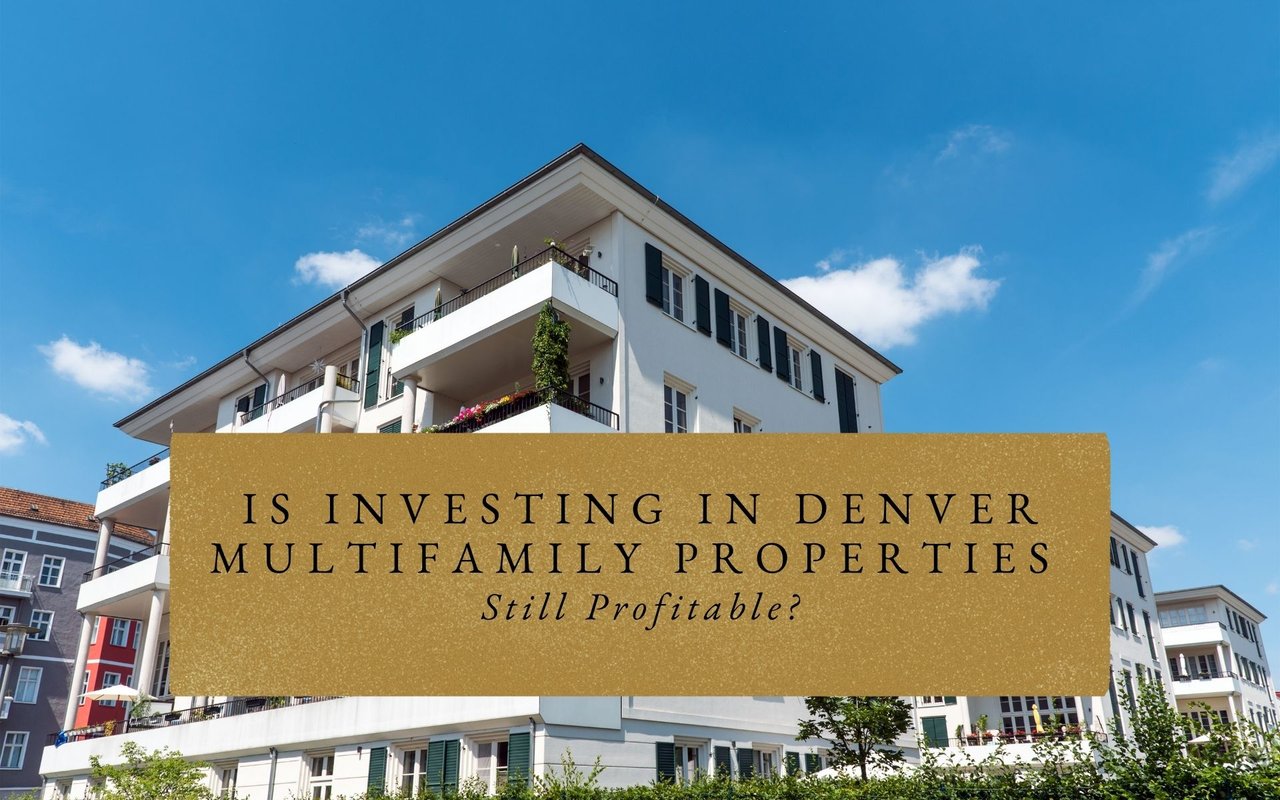
Is Investing in Denver Multifamily Properties Still Profitable?
If you've been thinking about investing in Denver real estate, there's a good chance multifamily properties have crossed your mind.
Maybe you're looking at a duplex in Littleton. A fourplex in Englewood. A small apartment building in Parker. Or perhaps you're considering a larger multifamily property in one of Denver South Metro's growing communities.
And then comes the big question:
Does multifamily real estate still make sense in Denver?
My answer is: yes—but you have to be much more selective than you were a few years ago.
The days of buying almost anything and counting on rapidly rising rents and appreciation are behind us. Today's successful investor needs to look closely at the numbers, the neighborhood, the tenant pool and the long-term potential.
The good news?
Denver South Metro continues to have communities with strong lifestyle appeal, employment access, growing amenities and demand for rental housing.
Let's take a closer look.
First, What Is Happening With Denver Multifamily Real Estate?
Denver's multifamily market has gone through a major adjustment.
A large number of new apartment units were delivered across the metro area, giving renters more choices and putting pressure on landlords to compete.
That has meant slower rent growth and, in some areas, higher vacancy.
But we're starting to see signs of stabilization.
The important thing for investors is that more inventory doesn't necessarily mean less opportunity.
It means the property has to stand out.
A well-located, well-managed property with reasonable rents can still attract tenants even when renters have more options.
And that brings me to my first recommendation.
1. Castle Rock — Invest in the Growth, But Watch the Competition
Location: Douglas County, south of Denver
Castle Rock is one of the communities I would keep on an investor's radar.
The population growth, employment access, retail development, restaurants, recreation and overall quality of life have made the area attractive to both homeowners and renters.
What makes it special
Castle Rock offers a suburban lifestyle while remaining within reasonable reach of both Denver and the Colorado Springs corridor.
That's an attractive proposition for renters who want more space and amenities without living in the middle of a major city.
Best things to look for
For an investment property, I'd pay close attention to:
- Proximity to employment
- Access to I-25
- Nearby shopping and restaurants
- Trail and recreation access
- New construction competition
- Parking
- Property condition
- Rent levels compared with newer communities
Why locals love it
Castle Rock gives residents that combination of space, scenery and convenience.
Investor tip
Don't assume every Castle Rock property is a great investment simply because the community is growing.
The area has also seen substantial multifamily construction. Your property's location and competitive position matter enormously.
2. Parker — A Strong Lifestyle Rental Market
Location: Southeast Denver Metro
Parker is another community worth watching.
It's particularly attractive to renters who want a suburban environment, access to parks and trails, good community amenities and proximity to employment centers.
What makes it special
Parker has developed a strong identity of its own. Residents aren't simply choosing it because it's cheaper than Denver.
They're choosing it because they like the lifestyle.
Best things to look for
When evaluating a Parker investment, look for properties near:
- Mainstreet Parker
- Major transportation routes
- Employment centers
- Shopping and restaurants
- Parks and trails
- Schools and family amenities
Why locals love it
There's plenty to do without constantly driving into Denver.
Investor tip
Think about your ideal renter.
A property that appeals to young professionals may have a very different location profile than one targeting families.
Know who you're trying to attract before you buy.
3. Littleton — Established Neighborhoods & Convenient Living
Location: Southwest Denver Metro
Littleton is particularly interesting for investors who prefer established communities.
Unlike some of the newer suburban areas, Littleton has mature neighborhoods, established retail corridors, parks, trails and a strong sense of place.
What makes it special
It combines suburban living with relatively easy access to the city and major employment centers.
Best things to look for
Look for properties with convenient access to:
- Light rail
- Downtown Littleton
- South Platte River trails
- Shopping
- Restaurants
- Parks
- Major roads
Why locals love it
Littleton offers something many renters want:
Convenience without sacrificing neighborhood character.
Investor tip
Older multifamily properties can sometimes present value-add opportunities, but don't let a low purchase price fool you.
Investigate the roof, plumbing, electrical, sewer, HVAC, foundation and deferred maintenance carefully.
The cheapest property isn't always the best deal.
4. Englewood — Location Can Be the Investment
Location: South Denver Metro
If you're looking for a more urban multifamily investment, Englewood deserves a close look.
What makes it special
Englewood provides access to employment centers, transportation, restaurants, shopping and entertainment while remaining close to Denver.
Best things to look for
Properties near transit, shopping and walkable commercial areas can be particularly interesting.
Why locals love it
You can accomplish more without getting in the car for every little thing.
Investor tip
This is a great example of why I always tell investors:
Don't underestimate walkability.
A renter may be willing to pay more—or stay longer—for the ability to walk to coffee, restaurants, groceries or transit.
Those everyday conveniences can become part of your property's competitive advantage.
5. Highlands Ranch — Family-Oriented Rental Demand
Location: Douglas County
Highlands Ranch is a different type of investment story.
It has a strong suburban identity, extensive trails, recreation amenities, shopping and established neighborhoods.
What makes it special
It's designed around convenience and an active lifestyle.
Best things to look for
For multifamily or smaller investment properties, I'd pay attention to proximity to:
- Recreation centers
- Parks
- Trails
- Shopping
- Schools
- Employment centers
- Major highways
Why locals love it
It's easy to build a daily routine without traveling far.
Investor tip
Don't overlook the importance of community amenities.
For many renters—especially families—access to trails, parks and recreation can be just as important as the finishes inside the unit.
6. Lone Tree — Premium Location, Premium Considerations
Location: Douglas County
Lone Tree is an interesting market for investors because its location and amenities can command attention from renters looking for convenience.
What makes it special
You have access to major employment centers, shopping, dining, transportation and recreational opportunities.
Best things to look for
Properties near employment centers and transportation connections can have a strong competitive advantage.
Why locals love it
It's highly convenient for people working in the Denver Tech Center and surrounding business areas.
Investor tip
This is where I would be particularly careful about your purchase price.
A great location doesn't automatically make an overpriced property a great investment.
You still need the numbers to work.
7. Centennial — A Balanced Suburban Investment
Location: Arapahoe County
Centennial is another community I would consider when evaluating Denver South Metro rental opportunities.
What makes it special
It offers established neighborhoods, employment access, parks, trails, shopping and convenient transportation.
Best things to look for
Look for properties with easy access to:
- I-25
- E-470
- Light rail
- Employment centers
- Shopping
- Parks and recreation
Why locals love it
Centennial provides a comfortable suburban lifestyle while keeping residents connected to the broader metro area.
Investor tip
Pay attention to the surrounding housing market.
If renters can easily buy a comparable home, your rental needs to offer something compelling—whether that's location, amenities, lower monthly costs or flexibility.
So, What Makes a Multifamily Investment Profitable?
This is where the conversation gets more interesting.
A profitable multifamily property isn't necessarily the one with the highest rent.
It's the one where income, expenses, financing and long-term value all work together.
Before purchasing, I would look carefully at:
Purchase Price
Are you buying at a reasonable basis compared with similar properties?
Rental Income
Are current rents competitive with the market?
Vacancy
How frequently are units turning over?
Operating Expenses
What are you really spending on insurance, maintenance, utilities, taxes and management?
Capital Expenditures
What's going to need replacing over the next five to ten years?
Financing
Does the property still work if interest rates or financing terms aren't ideal?
Future Competition
Are several new apartment communities coming nearby?
These aren't glamorous questions.
But they're the questions that can determine whether your investment performs well.
Don't Forget the “Boring” Expenses
I've seen investors get excited about projected rental income and forget about everything that comes out of it.
Before buying, account for:
- Property taxes
- Insurance
- Property management
- Repairs
- Landscaping
- Snow removal
- Utilities
- Vacancy
- Tenant turnover
- Legal and administrative costs
- Capital improvements
And leave room for surprises.
Because eventually, something will break.
That's real estate.
The goal isn't to find a property where nothing ever goes wrong.
The goal is to own a property where you can handle the inevitable maintenance without destroying your returns.
Should You Buy New Construction or an Older Property?
There's no universal answer.
A newer property may mean fewer immediate maintenance concerns, but you may pay a premium for that condition.
An older property may provide more opportunity for value-add improvements, but you'll need to understand the potential capital expenses.
I like to ask:
“Where is the opportunity?”
Sometimes it's a newer property in an excellent location.
Sometimes it's an older property that needs cosmetic improvements but has excellent fundamentals.
Sometimes the best opportunity isn't the prettiest property.
It's the one where the numbers and location make sense.
What About Appreciation?
This is an important mindset shift for today's investors.
Don't buy a multifamily property assuming you'll make money simply because the property will be worth dramatically more five years from now.
Instead, look for an investment that makes sense based on its current income and realistic future growth.
If appreciation happens?
Wonderful.
But I'd rather see an investment that has a solid foundation without needing a crystal ball.
My Biggest Advice: Buy the Neighborhood, Not Just the Building
This is where my perspective as a real estate professional really comes into play.
You can renovate an apartment.
You can update a kitchen.
You can improve landscaping.
You can add amenities.
You can't move the property.
That's why location is so important.
When I'm evaluating a property, I want to know:
Can residents walk to anything?
How close are restaurants?
Where are the grocery stores?
How long does it take to reach major employment centers?
Are there parks and trails nearby?
What is the transportation situation?
What does the neighborhood look like five years from now?
Those answers help tell the story of future rental demand.
So, Is Denver Multifamily Still Profitable?
Yes—but today's market rewards investors who do their homework.
Denver isn't the same multifamily market it was a few years ago.
Renters have more choices. New construction has increased competition. Financing costs remain important. And investors have to be more disciplined about purchase price and operating expenses.
But Denver South Metro still has communities with strong fundamentals and lifestyle appeal.
Castle Rock. Parker. Littleton. Englewood. Highlands Ranch. Lone Tree. Centennial.
Each offers something different.
And that's exactly why I don't believe there's one simple answer to whether multifamily investing in Denver is profitable.
The better question is: Which property, in which neighborhood, at what price, with what strategy?
That's the question I'd want answered before writing an offer.
If you're considering investing in multifamily real estate in Denver South Metro, I'd be happy to help you evaluate the location, neighborhood, property characteristics and long-term potential.
Because a successful investment isn't just about the building.
It's about the people who want to live there—and the lifestyle the neighborhood provides.
Tammy Petit Loveland
Meridian Group Real Estate
Call: (720) 331-2355
Email: [email protected]