There was a time when one of the first questions I asked a buyer was, “Where do you need to commute?”
These days, that question still matters—but it isn't always the question that drives the home search.
For many of my clients across Denver South Metro, work has become more flexible. Some work entirely from home. Others head into the office two or three days a week. And that flexibility is changing the way people think about where they want to live.
In fact, the Denver metro area had an estimated 22.6% of its workforce working remotely in 2024, according to Pew Research Center analysis. At the same time, Denver South's workforce has settled into a more consistent hybrid model, with employees averaging about 1.13 remote days per week in 2025 compared with 3.06 days in 2021.
So, what does that mean for suburban real estate?
From where I sit, it means buyers are increasingly asking a different question:
“What kind of life do I want my home to support?”
The Home Office Is No Longer a Luxury
One of the biggest changes I've noticed is how buyers evaluate extra rooms.
A few years ago, a fourth bedroom might have been viewed primarily as a guest room or flex space. Today, buyers often walk into that same room and immediately envision a desk, monitors, good lighting and a quiet place to take a Zoom call.
And honestly, I understand it.
If you're spending part of your workweek at home, your workspace can have a major impact on how comfortable your home feels.
I'm seeing buyers pay closer attention to:
- Dedicated home offices
- Main-floor flex rooms
- Finished basements
- Extra bedrooms
- Quiet spaces away from the main living area
- Strong internet connectivity
- Natural light
- Space for two people to work from home
The important distinction is that buyers aren't necessarily looking for more house just for the sake of having more house.
They're looking for a home that works harder for them.
Why Suburbs Have Become More Attractive
When your commute changes from 45 minutes every morning to two or three days a week—or disappears altogether—the calculation changes.
Suddenly, being 10 or 15 miles farther from downtown may not feel like such a sacrifice if it means getting:
A bigger yard.
An extra bedroom.
A quieter street.
Better access to trails.
More storage.
A neighborhood pool.
A garage.
Or simply more breathing room.
Colorado's latest economic forecast specifically notes that remote work is motivating some buyers to seek larger homes outside denser urban areas, while Douglas, Arapahoe and Adams counties continue to see significant residential construction activity.
That's a meaningful shift.
The suburbs aren't simply competing with Denver on price. They're competing on lifestyle.
South Metro Communities Are Especially Well Positioned
This is one reason I continue to be excited about Denver South Metro.
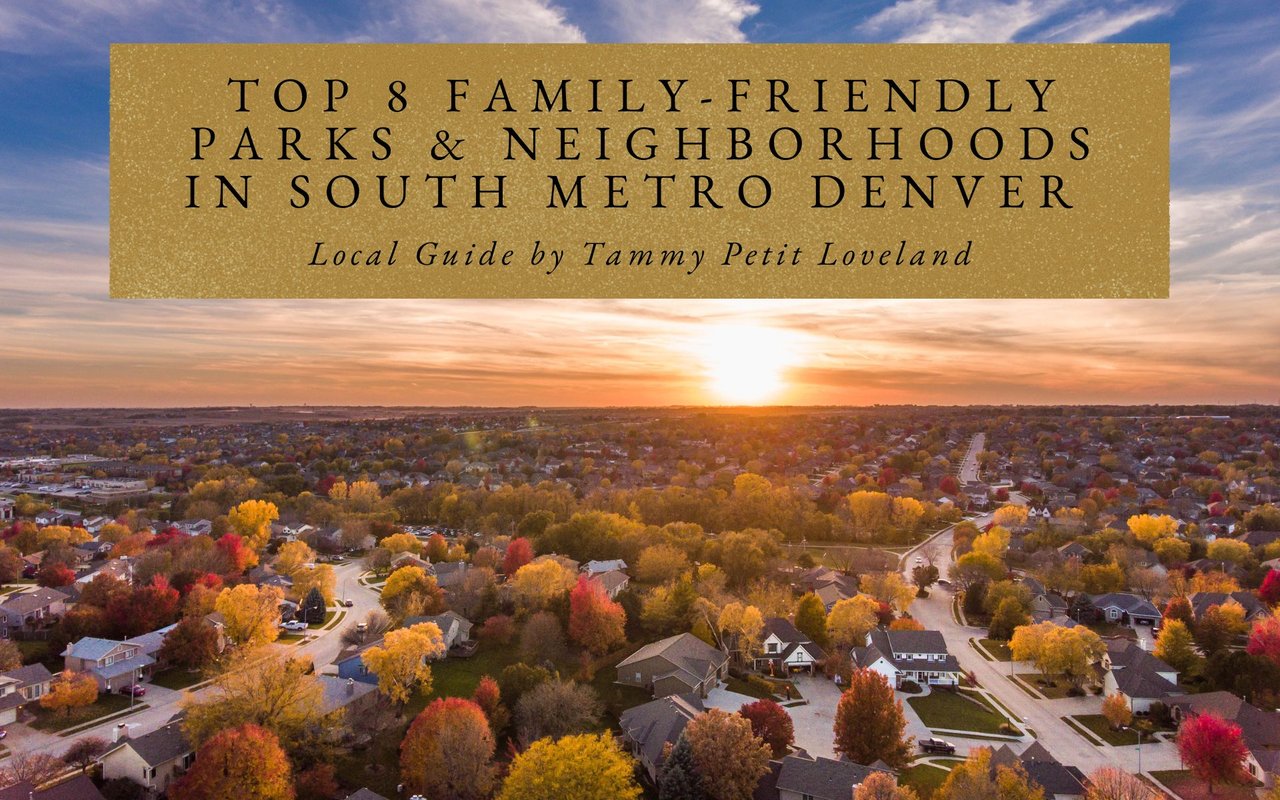
Communities such as Castle Rock, Castle Pines, Parker, Highlands Ranch, Lone Tree and Littleton offer different versions of suburban living while maintaining access to employment centers, shopping, dining, recreation and major transportation routes.
And here's something I tell buyers all the time:
Don't only measure a neighborhood by its distance from the office.
Look at what surrounds your home.
Could you walk to a park?
Is there a trail nearby?
How long does it take to get groceries?
Where's the nearest coffee shop?
Can you get to your child's school or activities easily?
Is there a community recreation center?
How difficult is it to get to the Denver Tech Center when you do need to go into the office?
Those details become much more important when your home is also your workplace.
Castle Rock: More Room to Work and Live
Castle Rock is a great example of how remote and hybrid work can influence suburban demand.
Many buyers are drawn here because they can get more space while still having access to shopping, restaurants, parks and outdoor recreation.
For someone working from home, a home office overlooking the trees or a finished basement that doubles as a workspace can feel much more appealing than squeezing a desk into a downtown condo.
And when the workday is finished?
You're minutes from trails, parks and the kind of outdoor lifestyle that makes Colorado so attractive in the first place.
That's the part I think gets overlooked.
Remote work isn't necessarily making people less connected to their communities. It can actually give them more opportunities to enjoy where they live.
Highlands Ranch: Convenience Meets Lifestyle
Highlands Ranch continues to appeal to buyers who want a suburban environment without giving up convenience.
The community's extensive trail system, recreation amenities, shopping and neighborhood infrastructure make it particularly attractive for people who want their daily life to happen close to home.
If you're working remotely, that might mean taking a morning walk before opening your laptop, heading to a recreation center at lunch or squeezing in a trail run after your final meeting.
And for hybrid workers, access to major employment corridors remains important.
It's that balance that makes communities like Highlands Ranch so appealing.
Parker: Space Without Feeling Isolated
Parker has also benefited from the broader demand for suburban living.
Newer neighborhoods, larger homes, parks and recreational opportunities give buyers plenty of ways to create a home environment that accommodates both work and family life.
For families, this can be especially valuable.
The extra bedroom can become an office. The basement can become a playroom and workout area. The backyard becomes an extension of the living space.
You're not just buying square footage.
You're buying flexibility.
The Commute Still Matters—Just Differently
Now, I don't want to give the impression that commuting has become irrelevant.
It hasn't.
Denver South's 2026 commuter survey found that 85% of respondents are required to be in the office at least three days a week, and the average one-way commute had increased to 19.5 miles.
That's why I think the future of Denver real estate isn't simply “everyone moves to the suburbs because they work remotely.”
It's more nuanced.
We're seeing a hybrid lifestyle emerge.
People want the ability to work from home—but they also want reasonable access to employment centers when they need to be there.
That makes location incredibly important.
The sweet spot may be a home that gives you suburban space and lifestyle while keeping your commute manageable two or three days a week.
What Buyers Should Look for in a Remote-Work-Friendly Home
If you're planning to buy a home where you'll work remotely, I recommend looking beyond the number of bedrooms.
1. Look for dedicated workspace
A true office with a door can be worth its weight in gold when you're on an important call.
2. Think about natural light
You're going to spend a lot of time there. A workspace with windows can make a huge difference.
3. Check internet availability
Don't assume every neighborhood or property has the same connectivity options. Verify what's actually available before purchasing.
4. Consider noise
Open-concept homes can look beautiful, but they're not always ideal when one person is on a conference call while everyone else is home.
5. Think about your future needs
Will you still work remotely in five years? Could another family member start working from home? Do you need room for a home gym, hobby or guest space?
6. Evaluate the neighborhood—not just the house
A beautiful home isn't as appealing if you're constantly driving 20 minutes for everyday errands.
Look for parks, trails, restaurants, grocery stores, coffee shops and other amenities that make your daily routine easier.
What This Means for Sellers
If you're selling a suburban home, don't underestimate the value of highlighting spaces that can support today's work-from-home lifestyle.
That awkward little room next to the kitchen?
It may be an office.
That finished basement?
It may be the perfect secondary workspace.
That oversized loft?
It may be exactly what a buyer needs.
And in today's more balanced Denver market, presentation matters. Denver Metro buyers have more choices than they did during the frenzy of 2020–2022, and current market data shows that buyers are increasingly selective about condition and move-in readiness.
So if you're selling, don't simply tell buyers that your home has four bedrooms.
Show them how those four bedrooms can support the way people live today.
Remote Work Has Changed What “Location” Means
This may be the biggest takeaway.
For years, real estate advice often centered around one simple idea:
Location, location, location.
That hasn't changed—but the definition of a great location has.
Today, location might mean:
- A manageable commute to the office
- A quiet neighborhood for working from home
- A nearby coffee shop for a change of scenery
- Trails and parks within walking distance
- Easy access to shopping and restaurants
- Good schools and community amenities
- A home office or flexible living space
- Convenient access to major highways and employment centers
In other words, location is increasingly about lifestyle.
And that's exactly why I love working with buyers throughout Denver South Metro.
Whether you're considering Castle Rock, Castle Pines, Parker, Highlands Ranch, Lone Tree, Littleton or another nearby community, my job isn't simply to find you a house.
It's to help you find the community and home that make sense for the way you actually live and work.
If remote work has changed what you need from your next home, let's talk about what that looks like for you.
Tammy Petit Loveland
Meridian Group Real Estate
(720) 331-2355
[email protected]