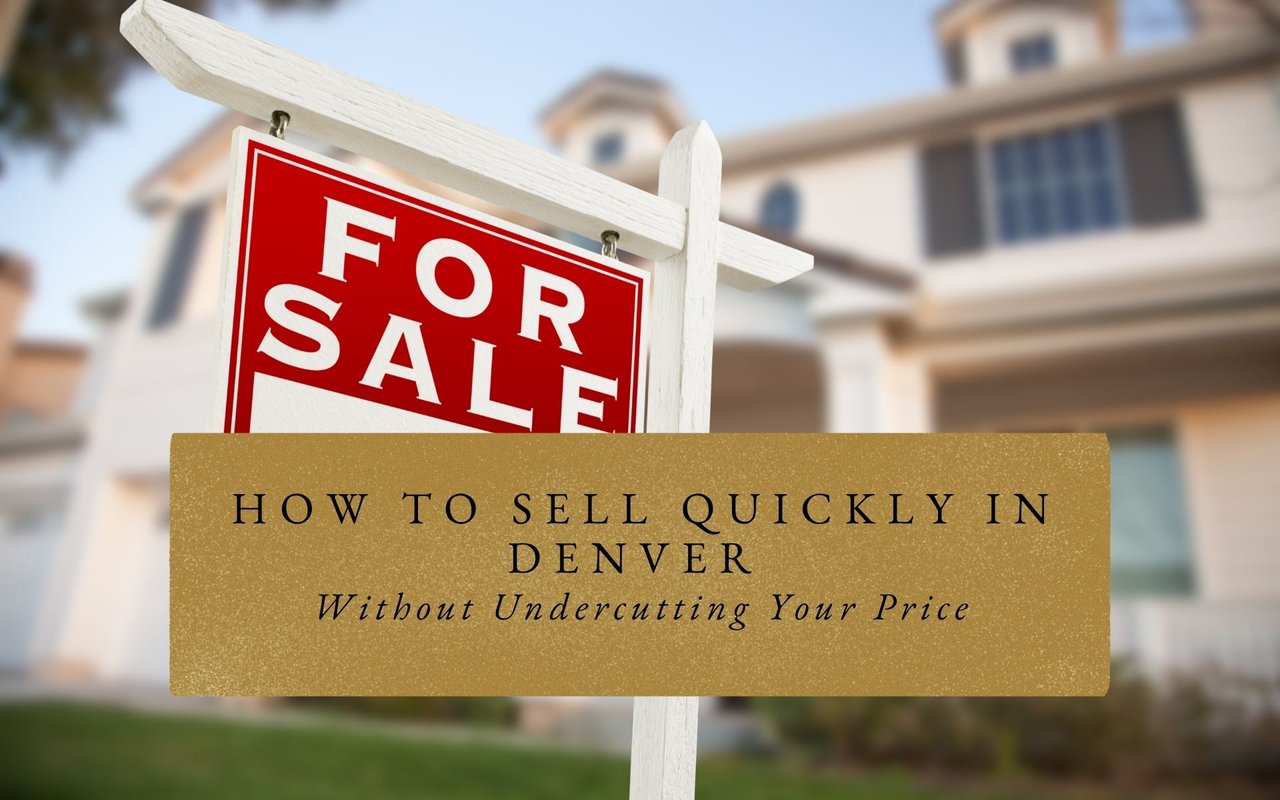
How to Sell Quickly in Denver Without Undercutting Your Price
In 2026, Denver’s market feels very different from the 2021–2022 frenzy. Inventory is higher, buyers have more choices, and homes that sit past 30 days start to look “stale.” The good news: you don’t have to slash your price to sell quickly. You do need a smarter plan.
Here’s how I help sellers in the South Metro move fast—without leaving money on the table.
The 2026 Reality: Why Some Homes Fly and Others Sit
In today’s Denver market:
Well‑priced, well‑presented homes often sell in the first 7–14 days.
Homes that linger past 30 days typically end up selling for less, because buyers assume something’s wrong or that the seller is desperate.
Buyers are comparing dozens of listings online. Your home has seconds to make a strong impression.
The formula that works now is simple: prepare deeply, price strategically, market aggressively, and make it easy for buyers to say yes.
How to Sell Fast Without Dropping Your Price
1. Prepare 4–6 Weeks Before You List
Deep clean, declutter, and depersonalize. Remove 30–50 percent of belongings so rooms feel bigger and brighter.
Fix small issues that scream “neglect”: leaky faucets, cracked tiles, burnt‑out bulbs, scuffed walls, and overgrown landscaping.
Consider a pre‑listing inspection so you can address surprises on your terms, not in the middle of negotiations.
2. Price Based on Recent Sold Data, Not Active Listings
Work with your agent to review homes sold in the last 90 days within a half‑mile radius, not just what’s currently on the market.
Price within 2–3 percent of strong comps. Overpricing “to test” usually costs you more in the end.
Use price bands strategically. Listing just below a major band (for example, 499,000 instead of 505,000) can bring in a much larger pool of buyers in the first critical week.
3. Launch on a Thursday and Create an Offer Deadline
Go live mid‑ to late‑week so your listing builds momentum over the weekend, when buyer activity peaks.
Set a “best and final” deadline 4–5 days after listing to create urgency and encourage competitive offers.
Be ready to respond quickly. In a balanced market, speed signals confidence.
4. Invest in Professional Photography, Video, and Possibly Drone
Listings with professional photos get significantly more online views and showings.
Add a simple walkthrough video and, for homes with views or larger lots, drone footage to show setting and context.
Use virtual staging for vacant or dated rooms so buyers can visualize the space without the cost of full staging.
5. Stage Key Areas to Match Your Price Point
Focus on living room, kitchen, primary bedroom, and baths—the rooms buyers care about most.
Float furniture, use neutral rugs, and remove oversized pieces to improve flow.
For vacant homes, consider full or partial staging; for occupied homes, a “refresh and rearrange” approach often works well.
6. Offer Strategic Concessions Instead of Price Cuts
Offer to cover a portion of closing costs or include a home warranty. This helps buyers with cash flow without lowering your headline price.
If you have a higher rate on your mortgage, consider a rate buydown credit for the buyer (if your lender allows).
Be flexible on closing dates and possession. Sometimes a later close or a short rent‑back is worth more to a buyer than a small price reduction.
7. Make Showings Easy
Aim for flexible showing windows, especially in the first two weeks. Homes that are hard to see get skipped.
Keep the home “show‑ready” at all times: lights on, curtains open, tidy surfaces, and pets out of the way.
The more buyers who can experience your home easily, the more likely you are to generate multiple offers quickly.
5–7 Specific Recommendations: Neighborhoods and Angles That Work
These are the kinds of listings and marketing angles I use in different Denver and South Metro neighborhoods to sell quickly without undercutting price.
1. Washington Park (Wash Park)
Location: South Denver, centered around the 160‑acre Washington Park.
What makes it special: One of Denver’s most beloved neighborhoods, with historic homes, mature trees, and a strong community feel.
Best items to try: Stage the home to highlight original details (brick, built‑ins, hardwoods) while updating key areas like kitchen and baths. Use lifestyle photos that show the park, nearby streets, and local shops.
Why locals love it: Buyers here are emotionally connected to the area. A well‑presented home that feels like an invitation to a specific lifestyle—walks in the park, coffee on South Gaylord—converts quickly.
2. Highlands Ranch
Location: South Metro, along C‑470 and Broadway.
What makes it special: Large master‑planned community with four rec centers, miles of trails, parks, and Douglas County schools.
Best items to try: Feature rec centers, trails, and nearby schools in your marketing. Use a mix of photos and short clips that show how the neighborhood supports family life.
Why locals love it: Families are investing in a lifestyle—sports, trails, community events. Listings that clearly connect the home to those amenities stand out and sell faster.
3. Littleton / Downtown Littleton Area
Location: Southwest of Denver, near the light rail and historic downtown.
What makes it special: Small‑town main street feel, light rail access, and a mix of older charm and newer infill.
Best items to try: Emphasize walkability to downtown, light rail commute, and local shops/restaurants. Use photos that show the home’s relationship to the neighborhood—front porch, nearby streets, and local hubs.
Why locals love it: Buyers here value convenience and character. Marketing that highlights both—plus easy transit and local life—resonates strongly and can drive quick offers.
4. Central Park (Formerly Stapleton)
Location: Northeast Denver, near I‑70 and Quebec.
What makes it special: Master‑planned community with newer homes, extensive trails, parks, schools, and walkable town centers.
Best items to try: Use drone and ground video to show parks, trails, and town centers near the home. Highlight community amenities and modern layouts in the description.
Why locals love it: Families and professionals want to see the full package—home plus community. Marketing that shows how daily life works here (schools, parks, shops) gets strong engagement and faster sales.
5. Castle Rock / Castle Pines
Location: South of Denver along I‑25.
What makes it special: Douglas County schools, newer construction, and a mix of suburban neighborhoods and more wooded, upscale areas in Castle Pines.
Best items to try: Compare Castle Rock and Castle Pines neighborhoods, visit local parks and schools, and test commute times to DTC and downtown. Highlight mountain views, trails, and community amenities.
Why locals love it: Many families love the combination of strong schools, newer homes, and a slightly more “foothills” feel, especially in Castle Pines. It’s a popular choice for move‑up buyers who want space and quality.
6. Solar‑Friendly Neighborhoods (Various Denver Areas)
Location: Throughout Denver, including areas like Hilltop, Montclair, and parts of South Denver.
What makes it special: Homes with solar panels can leverage Denver’s 2026 solar incentive program, which can add tangible value for the right buyer.
Best items to try: List solar credits and estimated utility savings prominently in the description and marketing materials. Include a shot of the panels and a simple graphic explaining benefits.
Why locals love it: Energy‑conscious buyers appreciate clear, upfront information on savings and sustainability. This can be a real differentiator in a crowded market.
7. View and Setting‑Driven Homes (Foothills, South Metro, and Select Denver Neighborhoods)
Location: Foothills communities, parts of South Denver, and select suburbs with mountain or open space views.
What makes it special: Homes where the view, lot, or setting is a primary selling point.
Best items to try: Use drone footage to show the “reveal,” lot orbit, view shot, context pull‑up, approach, and a twilight hero shot. Build your social and ad content around these aerial clips.
Why locals love it: Buyers are often purchasing the setting as much as the house. Strong aerial and twilight imagery can dramatically increase click‑through rates and saves.
Tying It Back to Walkability, Lifestyle, and Community Amenities
In Denver’s 2026 market, the listings that convert best are the ones that sell a life, not just a floor plan:
Walkability: Highlight proximity to coffee, parks, shops, and transit. In neighborhoods like Wash Park, Littleton, and parts of central Denver, this is a huge part of the value.
Lifestyle: Show how the home supports Colorado living—outdoor time, entertaining, remote work, family activities. Use photos and video that feel like real life, not just perfect rooms.
Community amenities: Rec centers, trails, parks, schools, and town centers matter. In places like Highlands Ranch, Central Park, and many South Metro communities, these amenities are part of why people choose to live there.
When your marketing clearly connects the home to these elements, you attract buyers who can already picture themselves living there. That’s what turns views into showings, and showings into offers—without forcing you to undercut your price.
If you’re preparing to sell your Denver‑area home and want a plan that matches today’s market—smart pricing, professional photos, video, targeted ads, and a clear lifestyle story—I’d be happy to walk you through it. Call me at (720) 331‑2355 or email [email protected] and we’ll build a high‑converting listing strategy for your home.